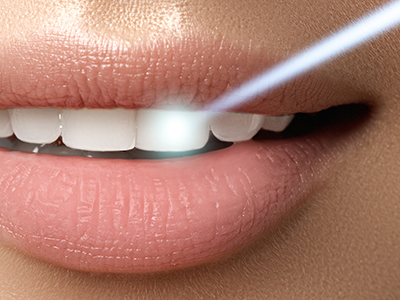
Dental lasers are precision tools that use focused light energy to interact with oral tissues. Rather than relying on mechanical cutting or large amounts of heat, modern dental lasers target molecules in soft tissue, hard tissue, or restorative materials to vaporize, reshape, or disinfect specific areas. This selective action allows dentists to perform many procedures with a level of control that traditional instruments can’t always match.
Different wavelengths are used for different purposes: some lasers are designed to treat soft tissues such as gums, while others are effective on hard tissues like enamel and dentin. Many treatments combine laser energy with controlled air and water to optimize cutting action and reduce thermal transfer to nearby tissue. Because the energy can be focused so precisely, the surrounding healthy tissue is often preserved to a greater degree than with conventional methods.
While the underlying science can be technical, the practical result for patients is straightforward: targeted treatment that reduces collateral tissue stress and streamlines certain procedures. Dentists who use lasers integrate them into their diagnostic and treatment planning so that each tool is applied where it offers the most benefit.
Lasers are versatile and are used across a range of dental services. In restorative situations, they can remove decay and prepare teeth for fillings while preserving more healthy tooth structure. For periodontal care, lasers help remove diseased tissue, reduce bacterial levels in pockets, and promote an environment that supports healing when combined with standard periodontal therapy.
Oral surgery applications include the precise removal of soft-tissue lesions, frenectomies, and biopsies with minimal bleeding and swelling. Lasers are also used in cosmetic treatments — for example, to activate certain in-office whitening systems — and as adjuncts in endodontic therapy and implant site preparation in specific cases. Each application is chosen based on the clinical goals and anatomy of the patient.
It’s important to note that lasers are one option among many. Skilled clinicians evaluate each case and select the most appropriate combination of instruments and techniques to achieve predictable, long-lasting results.
One of the most noticeable differences for patients is the reduced sensation of vibration and pressure compared with rotary instruments. Because many laser procedures do not rely on direct mechanical contact, patients frequently report less discomfort during treatment. This can mean less need for local anesthetic in certain procedures and a calmer experience for those with dental anxiety.
Lasers also help control bleeding and lessen postoperative inflammation. The coagulative effect of certain laser wavelengths seals small blood vessels as they work, which minimizes bleeding during soft-tissue procedures and can make recovery easier. Reduced swelling and a lower risk of infection are common benefits when lasers are used as part of a comprehensive treatment plan.
Precision is another key advantage. The targeted nature of laser energy allows clinicians to shape and remove tissue with fine margins, preserving healthy structures and supporting conservative dentistry. For patients, that often translates to faster healing, fewer complications, and treatment that feels more predictable.
Laser dentistry is governed by clear safety protocols. Clinical teams wear protective eyewear matched to the laser’s wavelength, and operators complete specific training to use each device safely and effectively. Proper settings, maintenance, and technique are essential to avoid unintended tissue effects, so credentialed training and ongoing professional development are core requirements for practices that offer laser therapy.
Despite their advantages, lasers are not suitable for every clinical situation. Large-scale restorations, complex crowns or bridges, and many types of mechanical finishing still rely on traditional instruments. Additionally, some lasers cannot penetrate certain materials or reach deep anatomical sites, so conventional techniques remain indispensable. A thoughtful clinician will recognize when a laser is the right tool and when another approach will produce a better outcome.
In short, lasers expand the clinician’s toolkit but don’t replace comprehensive clinical judgment. Patients receive the best care when technology is combined with evidence-based decision-making and an experienced dental team.
Laser therapy is most effective when integrated into a broader plan that includes diagnostics, preventive care, and restorative techniques. For example, lasers may be used to prepare a tooth conservatively before placing a filling, or to manage soft tissue around a crown margin to improve impressions and final aesthetics. In periodontal cases, laser procedures are paired with scaling, root planing, and maintenance to support long-term health.
Digital tools such as intraoral cameras and digital radiography complement laser treatments by improving visualization and documentation, which helps clinicians plan precise interventions. Combining lasers with these technologies enhances accuracy and allows for more predictable clinical outcomes across many types of care.
Ultimately, the goal of integrating lasers is to deliver care that is comfortable, efficient, and tailored to each patient’s needs. When used appropriately, lasers can shorten chairtime for certain procedures, improve soft-tissue management, and support conservative, tooth-preserving dentistry.
At Strohman Family Dental, we evaluate each patient individually to determine whether laser dentistry can provide meaningful benefits as part of a customized treatment plan. If you have questions about how lasers might affect your care or whether a specific procedure could be improved with laser technology, please contact us for more information.
Laser dentistry uses focused light energy to interact with soft tissues, hard tissues, or restorative materials in the mouth. The laser delivers energy at specific wavelengths to vaporize, cut, or disinfect targeted areas while minimizing impact on surrounding healthy tissue. This selective action allows clinicians to perform precise procedures that often preserve more natural structure than some traditional instruments.
Different wavelengths are absorbed by different biological targets, so the choice of device depends on the clinical goal and tissue type. Many lasers are used with controlled air and water to optimize cutting and reduce heat transfer to nearby structures. When integrated into treatment planning, lasers become an adjunctive tool that supports conservative, targeted care.
Common dental lasers include diode, erbium, and CO2 systems, each tuned to interact with specific tissues or materials. Diode lasers are frequently used for soft-tissue management and bacterial reduction, erbium lasers can work effectively on both enamel and dentin, and CO2 lasers are often chosen for precise soft-tissue cutting and coagulation. The selection depends on clinical indications, depth of penetration required, and the desired biological response.
Manufacturers design each device with particular absorption profiles, so clinicians match the wavelength to the task for optimal results. Some lasers are better suited for periodontal pocket disinfection, while others excel at removing decayed tooth structure or reshaping tissue. Proper device selection and calibrated settings are essential to achieve safe, predictable outcomes.
Lasers are used in a wide range of treatments, including decay removal and cavity preparation, periodontal therapy, soft-tissue contouring, frenectomies, and the precise removal of oral lesions. They are also used as adjuncts in endodontic therapy, for implant site preparation in selected cases, and to activate certain in-office whitening systems. Each application is considered when lasers can enhance precision, reduce bleeding, or improve soft-tissue healing.
In periodontal care, lasers can reduce bacterial levels and remove diseased tissue when used alongside scaling and root planing. For soft-tissue procedures, the coagulative properties of some wavelengths minimize bleeding and swelling, which may simplify postoperative care. Clinicians evaluate the anatomy and treatment goals to determine whether a laser will add measurable value to a specific procedure.
Laser dentistry is safe when used by trained operators who follow established safety protocols and manufacturer guidelines. Clinical teams wear wavelength-specific protective eyewear, and operators complete device-specific training and ongoing professional development to ensure correct settings and techniques. Proper maintenance, calibration, and documentation are also important to prevent unintended tissue effects.
Certain clinical circumstances require extra precautions, such as working near delicate structures or in patients with specific medical histories. Credentialed training and adherence to safety standards help clinicians recognize those limitations and select alternative approaches when necessary. Patients can expect a practice that offers lasers to follow strict protocols to protect both staff and visitors.
Many patients experience reduced vibration, pressure, and postoperative discomfort with laser procedures compared with some traditional rotary instruments. Because lasers often seal small blood vessels and reduce bacterial contamination, they can decrease bleeding and inflammation during and after soft-tissue treatments. This biologic effect commonly leads to easier initial healing and a lower risk of postoperative swelling.
In some cases, lasers reduce the need for local anesthetic or allow for more conservative numbing, which benefits patients with dental anxiety. Recovery still depends on the specific procedure, the patient’s overall health, and postoperative care practices. A clinician will explain expected sensations and healing timelines based on the planned laser application.
Yes. Lasers are not the ideal choice for every clinical scenario, such as large-scale restorative preparations, complex crown or bridge finishing, or areas where mechanical access is limited. Some lasers cannot effectively penetrate certain materials or reach deeply situated anatomy, so traditional mechanical instruments remain necessary for those tasks. A thoughtful clinician recognizes these limitations and uses lasers only when they clearly benefit the outcome.
Patient-specific factors may also influence suitability, including medications that increase photosensitivity or medical conditions that require special precautions. Preoperative evaluation and a thorough medical history help the clinician determine when to avoid laser use and when to combine it safely with other techniques. The result is a customized plan that prioritizes predictable, evidence-based care.
Lasers are most effective when integrated with diagnostics, preventive care, and conventional restorative techniques rather than used in isolation. For example, lasers can prepare a tooth conservatively before placing a filling or manage soft tissue around a crown margin to improve impressions and final aesthetics. Combining laser therapy with scaling, root planing, or digital workflows supports comprehensive, tooth-preserving dentistry.
Digital tools such as intraoral cameras, digital radiography, and digital impressions complement laser treatments by improving visualization and treatment documentation. When lasers are used as part of a multidisciplinary approach, clinicians can often achieve more precise and predictable clinical outcomes. Treatment planning always balances the advantages of laser technology with the broader goals of oral health and function.
During your visit, the clinician will review your medical and dental history, explain the proposed laser application, and discuss expected sensations and aftercare. Protective eyewear will be provided for you and the clinical team, and the device will be set to the appropriate wavelength and power for the procedure. Local anesthetic may or may not be needed depending on the treatment and your comfort level.
The actual procedure time varies with the complexity of the task, but many laser treatments are efficient because of reduced bleeding and more focused action. After the procedure you will receive specific recovery instructions and a schedule for follow-up as appropriate. Strohman Family Dental emphasizes clear communication so patients understand each step of care.
Postoperative care depends on the type of laser treatment performed, but general guidance includes gentle oral hygiene, avoiding irritants, and following dietary recommendations for the initial healing period. Keep the treated area clean with soft brushing and any prescribed rinses or topical agents to support tissue repair and reduce infection risk. Avoid smoking, alcohol, or spicy foods if they irritate the surgical site, as these can delay healing.
Follow-up appointments allow the clinician to monitor healing and address any concerns promptly. If you experience unexpected pain, prolonged bleeding, or signs of infection, contact the dental office for evaluation. Proper aftercare and adherence to instructions support predictable recovery and long-term tissue health.
Determining whether lasers are appropriate begins with a comprehensive clinical evaluation that includes a review of dental needs, anatomy, medical history, and treatment goals. The clinician will explain potential benefits and limitations of laser use for your specific case and compare alternatives when necessary. Shared decision-making helps ensure the chosen approach aligns with both the clinical objectives and the patient’s preferences.
If you are curious about laser options, schedule a consultation to discuss how they might integrate with your care plan and to review any questions you have about safety or expected outcomes. The practice team at Strohman Family Dental can explain how lasers fit into broader treatment strategies and recommend a personalized plan that prioritizes long-term oral health.